Imagine you just arrived in Estonia and you ask some local person “Which Estonian traditions or customs should I definitely learn about?” What do you think the answer would be? Perhaps they would talk about the Song Festival. Maybe they would tell you about the sauna, the Midsummer bonfire, or explain how an Estonian can walk silently in the forest for hours and consider it a very good day. These answers say a lot about what truly belongs to us and why Estonian customs and traditions can also touch those whose story began somewhere else.
The Song Festival is probably one of the first things that comes to mind. And yet, it is a little difficult to grasp solely from an explanation, isn’t it? You can think of it as a large choral festival. You can learn about the traditional folk costumes or imagine thousands of singers gathered under the singing arch. But that does not really convey why so many Estonians get teary-eyed or feel a lump in their throat when certain songs are sung. To experience it, you do not have to carry a tune or know the words by heart. It is enough simply to be among those tens of thousands of people who have found one shared voice.
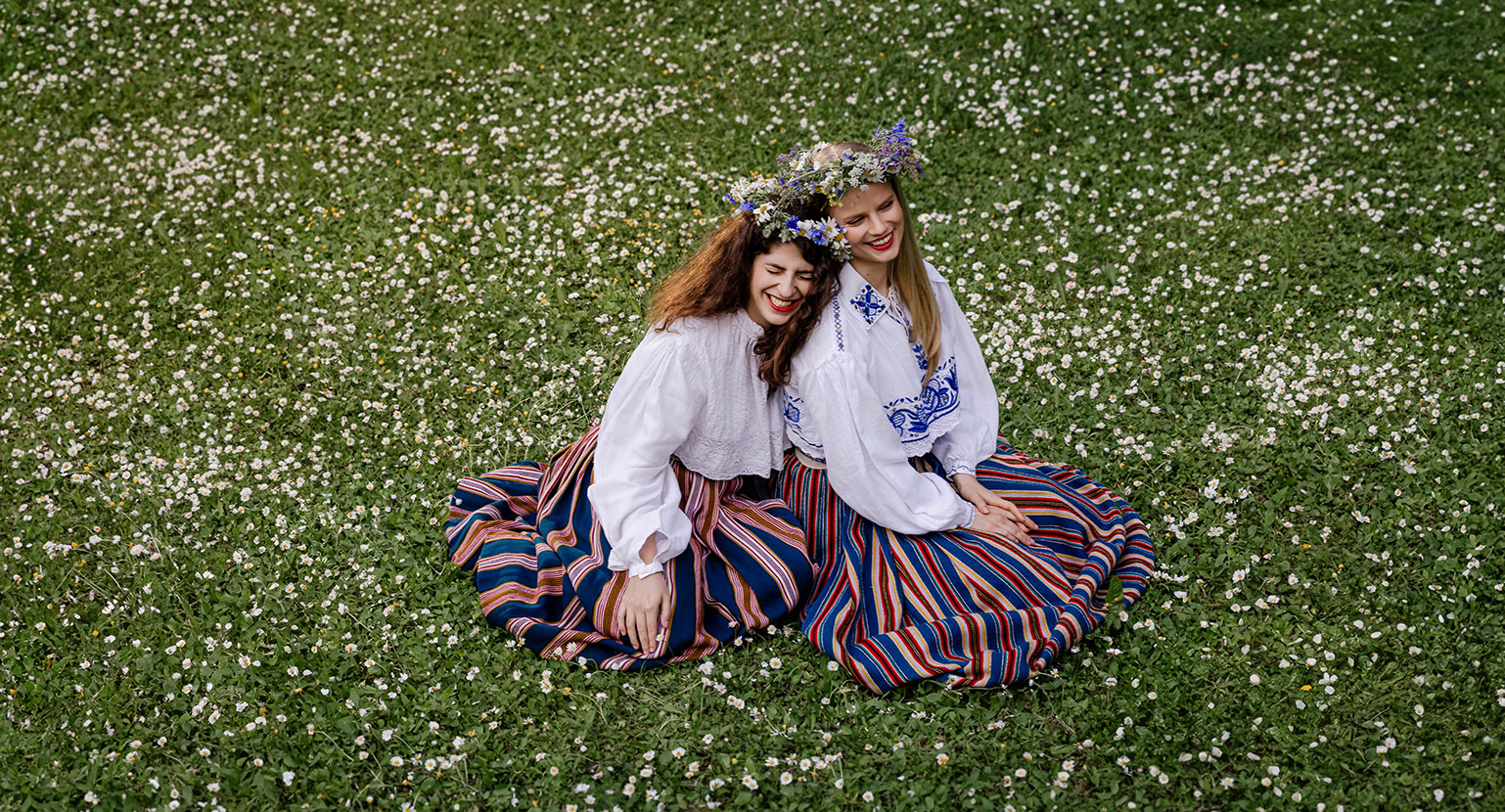
But Estonian culture does not live only in grand and ceremonial moments. Sometimes it is hidden in much smaller things. In the scent of birch in the air right after throwing water on the hot sauna stones. In the early mornings after sitting around the Midsummer bonfire all night. In the moments you get carried away searching the forest for chanterelles or blueberries. In the way the first fresh potatoes with sour cream taste so much better when you eat them in the fresh air during a warm summer day. In plunging into the sea despite the cold, because you have to do it at least once every year. These are small things that we enjoy ourselves and through which Estonia may begin to feel more like home to someone else.
Of course, it is important to preserve the language, customs, and traditions. But culture grows and thrives when it is shared. A little like sourdough starter, which becomes better and stronger by being actively used, not by being kept in a jar. When a person with a different cultural background learns to love the Song Festival, sauna, or Midsummer Day, these traditions do not become any less “Estonian.” Quite the opposite. It shows that there is something so special and moving in them that people are willing to make an effort to take part in them.
Integration may sound like a distant and official word, but in reality, it often begins with very simple moments. Someone invites you to spend Midsummer with their group of friends or explains why you do not have to talk all the time in the sauna. Someone teaches you when to say “jätku leiba” or how to throw water on the sauna stones. Integration does not mean that a person has to give up what is their own. Rather, it means adding something to one’s story: new places, people, habits, and meanings.
“Estonian at heart” does not mean that everyone must have the same background, the same childhood, or the same memories. It means recognising that a place, with its customs and people, has become so familiar and dear to you that you can truly call it home. And everyone wants to take care of their home.