EST | ENG | RUS

Small Skills, Big Estonian Energy

Being Estonian is sometimes associated with big things: our unique language, the Song Festival, folk dancing, or the ability to solve almost anything with an app. But when you really think about it, a great deal of “Estonianness” is found instead in small skills or activities that we tend to take for granted. Who was the person who taught you how to weave a wreath from dandelions, collect birch sap, or make a willow whistle? If no one immediately comes to mind, or if you are starting to wonder whether you even know how to weave a wreath at all, we have put together a small “how to be Estonian” cheat sheet for you.
  1. Making a sauna whisk

    The sauna is one place Estonians go with a good mood and a proper whisk. If you are not sure what a proper sauna whisk should be like, or where to buy one, it is actually quite easy to make one yourself. A sauna whisk is usually made from birch branches, and the best time to collect the branches is before Midsummer’s Day. When taking branches, be sure to choose trees growing under power lines or along ditch banks, and when gathering branches from the forest, take only as much as allows the tree to continue growing well. If you are not sure how to be social with people in the sauna, don’t beat yourself up over it! Ask someone else to do it – with a sauna whisk, of course.

  2. Going mushroom picking

    Estonians take mushroom picking very seriously, and there is no need to be offended if someone does not want to share their secret mushroom spot with you. In all likelihood, they will not reveal that information even to their loved ones. What people are usually happy to share, however, is knowledge about different mushroom species and ways to prepare them. Since many mushroom species are poisonous, you should never eat a mushroom unless you are certain what it is. Mushroom apps and various books are useful for educating yourself, but the easiest and most enjoyable way to learn about mushrooms is simply to ask people and communicate. For example, there is a Facebook group called “Eestimaa seened” with nearly 70,000 members, where you can find both knowledge and fellow mushroom enthusiasts

  3. Making things with your own hands

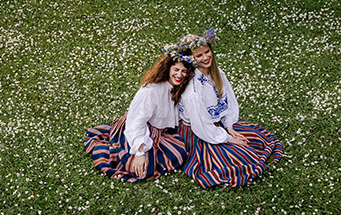
    Estonian handicraft is wonderful and rich, but in addition to Haapsalu shawls and Muhu skirts, there are also much simpler things you can make yourself. Spring, for example, is the best time to make a willow whistle or to remind yourself how to weave a wreath from dandelions. It is said that the best way to learn is to teach. So why not ask a friend or acquaintance whether they remember how wreath-weaving or whistle-making was done, or teach these skills to someone else instead?

  4. Sampling strange things from the forest

    Most Estonians know what “ant pee,” birch sap, or spruce tips taste like. For the first, slightly odd but healthy gourmet product, you need to stick a peeled alder twig, moistened in your mouth, into an anthill and wait until the ants spray it with formic acid. Maple sap can be collected in February and birch sap in March. In addition to using the right technique, you need to make sure that the tree you have chosen is not located next to a major road or in someone else’s yard, and that your activity does not harm the tree. Young spruce tips, meanwhile, are a powerful vitamin boost for shaking off spring fatigue. You may not go sharing “ant pee” with your neighbor, but when it comes to birch sap or spruce tip syrup, it would be almost a sin to keep them all to yourself.

No one is more or less Estonian because they know the right time to go into the forest for sauna-whisk branches, can make a million things out of birch bark, or know every mushroom species by heart. Rather, it is worth reminding ourselves from time to time that our richness does not lie only in great achievements or major undertakings, but also in very simple things. Sometimes these truths come back to us only when we experience them through someone else’s delighted eyes.

GET IN TOUCH

Ministry of Culture
Suur-Karja 23, 15076 Tallinn
+372 628 2222
min@kul.ee